
Q2 2026 Supply Chain At-A-Glance (TL;DR)
- Memory price surges: DRAM and NAND contract prices are climbing up to 75% this quarter due to explosive AI data center demand.
- Material bottlenecks: The Middle East conflict has constrained the Strait of Hormuz, directly impacting global helium and bromine availability.
- Extended lead times: Critical MOSFETs and discretes from suppliers like Infineon and Vishay now routinely exceed 52 weeks.
- Broad price hikes: Analog and power-management leaders (TI, Analog Devices) and connector makers (TE Connectivity, Molex) have pushed repeated 2026 list-price increases, in some cases a second or third in under a year.
- Tariff volatility: The July 24 Section 122 import surcharge deadline creates immediate financial compliance risks.
A Quarter That Changed the Math
When we published our first 2026 supply chain outlook in March, we wrote that the electronics supply chain had permanently changed. The past eleven weeks have shown how quickly that change can show up in actual purchase orders, quoted lead times, freight assumptions, and landed-cost models.
Since that report, the United States and Israel launched strikes against Iran. Commercial traffic through the Strait of Hormuz has become severely constrained as a result. At the same time, memory contract prices have posted some of the sharpest quarterly increases the market has seen in years. Selected discrete and power semiconductor families have moved into 40- to 60-plus-week lead times. Finally, the U.S. tariff regime has shifted again as the Section 122 surcharge moves through the courts.
The Middle East conflict began on February 28, 2026. Public reporting from the Congressional Research Service (CRS) described pre-war Hormuz traffic at roughly 130 ships per day. By April, that volume fell to only a handful of daily transits.1
This is the first installment of PPSI’s new Quarterly Supply Chain Report series. The pace of change in the electronics market has made a once-a-year update insufficient. Our customers need visibility into what is happening now and what is likely to affect the next ninety days of procurement activity. This insight allows teams to make program decisions with the best information available.
The headline is straightforward. Nearly every major cost input PPSI tracks is moving in the wrong direction at the same time. Components, memory, energy, freight, and tariffs are all under pressure simultaneously. There is no single disruption to manage around. Instead, there is a stack of overlapping disruptions where each one feeds the next.

Q2 Buyer Action Plan
For OEM buyers, the most important actions this quarter are practical and immediate:
- Re-quote early: Re-price any BOM quoted before April 2026 before committing to final customer pricing.
- Lock requirements: Secure near-term requirements for memory, discretes, MOSFETs, diodes, IGBTs, and ESD devices wherever demand is known.
- Mitigate Nexperia risk: Identify Nexperia exposure on approved vendor lists (AVLs) and qualify alternates immediately.
- Audit tariff exposure: Review HTS classifications, country of origin, and China-origin content before the July 24 Section 122 enforcement date.
- Preserve documentation: Save all customs documentation in case Section 122 litigation creates refund opportunities.
- Verify part numbers: Treat supplier lead times as part-number-specific rather than category-wide. Always validate current guidance before making customer commitments.
The Iran War and Semiconductor Materials
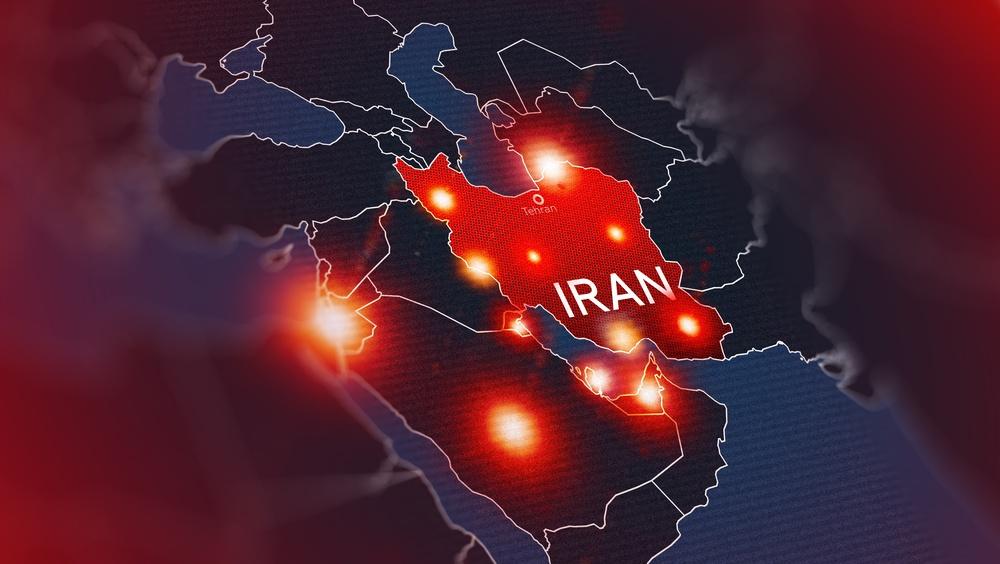
The Middle East conflict has moved from a regional security issue to a direct electronics supply chain threat. The war has severely disrupted normal commercial assumptions around the Strait of Hormuz. Before the conflict, roughly 130 ships transited the strait each day. By April, public government reporting described only a handful of ships risking the passage daily. Later shipping reports have continued to show severely limited traffic.2
Even if a diplomatic agreement reopens the strait, supply chains should not assume an immediate return to normal. Normalization will have to account for war-risk insurance, vessel backlogs, mine risk, port congestion, rerouting decisions, and carrier confidence. In practical terms, Hormuz is not simply an on/off switch. It is a risk zone that could take months to stabilize.
The energy effect is already visible. Brent crude traded near $120 per barrel in the early weeks of the conflict before settling lower. In response, the International Energy Agency announced a 400 million barrel emergency stock release. Higher energy prices matter to electronics because they flow into fab power costs, chemical production, freight, packaging materials, and global inflation.3
For electronics buyers, however, the larger issue is what the conflict is doing to semiconductor manufacturing materials. Three materials matter most:
- Helium: Qatar’s Ras Laffan-linked production disruption removed roughly one-third of the global helium supply from the market, and QatarEnergy declared force majeure in early March. Helium is used in semiconductor manufacturing for cooling, purging, and process-control applications, and there is no simple drop-in substitute for several critical fab uses. Even after production resumes, supply normalization may take weeks or months as logistics, contract allocation, and inventory positions reset.4
- Bromine: Israel and Jordan together account for roughly two-thirds of global bromine production. Bromine is a feedstock for semiconductor-grade hydrogen bromide and related specialty chemistries used in advanced chipmaking, especially etch processes. This has not yet become a full shortage, but it represents a highly concentrated geographic risk sitting near an active conflict zone.5
- Sulfur and sulfuric acid: Gulf producers supply sulfur and related inputs that support the mining, leaching, and refining of critical materials used across semiconductor, battery, and electronics supply chains. Sulfur was already a pricing concern before the conflict escalated. The Hormuz closure has turned that pricing concern into a broader lead-time and availability concern.
For East Asian semiconductor manufacturers, the exposure is significant. South Korea imports roughly 70 percent of its crude oil from the Middle East. The region’s memory and logic manufacturers are now operating in an environment where energy, specialty gases, specialty chemicals, and freight are all less predictable than they were at the start of the year.6
Samsung and SK Hynix have meaningful high-bandwidth memory contract coverage. However, a prolonged materials or energy disruption can still affect production planning, commodity DRAM availability, and pricing outside long-term agreements. For PCBA and component buyers in the United States, the practical effect is simple: the materials feeding the global semiconductor industry are exposed to a war zone, and the buffer that existed when the conflict began is being consumed faster than it can be replenished.
Memory: One of the Sharpest Shortages in Fifteen Years
The memory market has moved from constrained to strategically allocated. TrendForce reported that conventional DRAM contract prices rose 90 to 95 percent quarter over quarter in Q1 2026. For Q2, TrendForce projected another 58 to 63 percent increase for conventional DRAM. They also project a 70 to 75 percent increase for NAND Flash contract prices. The cumulative effect is that memory has been repriced upward with no near-term reversal visible.7
The underlying driver is artificial intelligence infrastructure demand. TrendForce has revised 2026 capital expenditure for the top nine global cloud service providers to approximately $830 billion. This represents an increase of 79 percent year over year. That spending is being concentrated in high-performance GPU clusters, AI accelerators, high-bandwidth memory, enterprise SSDs, networking, and high-power-density data centers.8
Samsung and SK Hynix together account for a large majority of global DRAM production. Both have reallocated capacity toward high-bandwidth memory and enterprise SSDs to serve AI workloads. That leaves general-purpose DRAM, DDR4, certain DDR5 categories, embedded memory, and consumer or industrial NAND with less available supply than buyers expected twelve months ago.
The implications for industrial, aerospace, defense, and energy electronics customers are direct. Embedded memory devices, automotive-grade flash, and DDR4 and DDR5 modules are all being pulled into the same allocation environment as AI server memory. These components are used heavily in industrial controllers, instrumentation, test systems, and defense electronics. DDR4, which many buyers expected to soften as it approached end of life, has instead become one of the more volatile categories in the market.
For OEMs working with PPSI, memory should now be treated as a strategically managed component category, not as a commodity buy. Pricing volatility is high, lead times are extended, and allocation cuts can happen with limited notice. Buffer inventory, multi-source qualification, and early commitments to forecast volumes are no longer optional best practices. They are the difference between shipping on schedule and missing a delivery commitment.
Discrete Semiconductors: Market Vulnerabilities
Lead-time and pricing data in this section combines public market reporting with PPSI distributor and manufacturer communications received through May 2026. Supplier guidance can change without notice and should be validated at the part-number level before making customer commitments.9
Public checks show rising lead times across semiconductor segments. At the same time, PPSI supplier intelligence shows that specific approved parts can be substantially worse than category averages. A public average can show a 25- to 37-week MOSFET market while a specific approved part on an industrial or aerospace BOM is quoting 52 weeks or more.
The current picture from PPSI supplier intelligence is broken down below. The table is ordered by procurement urgency, placing the most constrained lines at the top:
| Supplier or category | Current guidance | Procurement implication |
|---|---|---|
| Infineon MOSFETs | Selected families quoting beyond 52 weeks | Validate active AVL exposure and lock known demand immediately. |
| Vishay MOSFETs | Selected families beyond 52 weeks with continued pricing pressure | Treat old quotes as stale and confirm alternates. |
| STMicroelectronics | Many categories pushing beyond 40 weeks | Re-quote open demand affected by April pricing updates. |
| Diodes Inc. | Allocation delivery around 40-plus weeks across constrained portions of the portfolio | Lock near-term demand and review alternate manufacturers. |
| Littelfuse | Approximately 10 to 60 weeks depending on the specific family | Review at the part-number level before committing delivery dates. |
| onsemi discretes | Approximately 7 to 52 weeks depending on the family | Watch for allocation priority shifts toward automotive demand. |
| Micro Commercial Components | Approximately 6 to 52 weeks depending on the family | Confirm whether quoted availability is factory stock or distribution stock. |
| Renesas and Rohm discretes | Many families trending longer, with some moving toward 52 weeks | Identify second sources before allocation tightens further. |
On pricing, supplier and distributor communications reviewed by PPSI show increases across discrete portfolios effective in April and May. Additional increases are scheduled for June and July. This pricing pressure is driven by rising raw material costs, higher fab utility expenses, and the structural realities of running lines at or near capacity.
The practical reality for an OEM buyer is that the window for re-quoting and re-committing is narrower. The penalty for waiting is higher. The value of strategic buffer stock, multi-source qualification, and proactive supplier engagement has gone up sharply.

The Price-Hike Wave Reaches Analog ICs and Connectors
The cost pressure visible in discrete portfolios has moved up the bill of materials into analog and power-management ICs and into interconnect. Several major suppliers have issued repeated price increases through 2026, in some cases a second or third increase in under a year. For programs quoted against last year’s pricing, this is where margin quietly erodes between award and shipment.
As with the discrete data above, the guidance below combines public market reporting with PPSI distributor and manufacturer communications received through May 2026. These price actions are list-level and supplier-wide. The realized impact on any given BOM depends on part mix, contract status, and distribution stock, so confirm at the part-number level before committing customer pricing.
| Supplier | Recent pricing and lead-time guidance | Procurement implication |
|---|---|---|
| Texas Instruments | Third broad increase in roughly a year: 15 to 85 percent on digital isolators and power-management ICs effective April 1, 2026, followed by a second 2026 increase effective July 1. Selected high-demand analog lead times are extending.16 | Re-quote all open TI demand before July 1 and treat any pre-April quote as stale. |
| Analog Devices | 10 to 30 percent increase effective February 1, 2026. Commercial-grade parts rose 10 to 15 percent, while roughly a thousand military-specification (/883) part numbers rose up to 30 percent.17 | Military and aerospace BOMs are hit hardest. Re-price ADI content now and lock known demand. |
| TE Connectivity | Global list-price increase of roughly 5 to 12 percent across the full portfolio effective January 5, 2026. Order backlog and lead times are extending on AI and data-center demand, with a Q2 book-to-bill near 1.12.18 | Lock connector demand early and expect shorter quote validity and NCNR terms. |
| Molex | Standard connectors up 3 to 5 percent and U.S.-made products up more than 10 percent, with industrial-grade lead times reported near 40 weeks in the distribution channel. | Validate at the part-number level and qualify alternates on long-lead industrial connectors. |
Connectors and analog ICs are easy lines to overlook on a BOM, but repeated 2026 increases have made them a real contributor to landed cost rather than a rounding error. The playbook is the same one that applies to memory and discretes: re-quote early, lock known demand, and qualify alternates before the next increase lands.
The July 24 Tariff Cliff
The regulatory environment is introducing as much cost volatility as the physical component market. The immediate focus for compliance and procurement teams is July 24, 2026. This marks the expiration of the temporary collection window for the Section 122 import surcharge.10
The litigation surrounding these duties remains fluid. The U.S. Court of International Trade (CIT) recently ruled that the broad administration of Section 122 surcharges exceeded statutory authority. However, the court limited immediate injunctive relief to the specific plaintiffs in the case. Customs and Border Protection (CBP) has indicated it will continue collecting the surcharge on entries from non-party importers through July 24 unless a broader appellate order is issued.11
For OEM programs, this means companies must plan around a complex range of potential tariff outcomes:
- If you import China-origin components: Evaluate your HTS classifications ahead of the June 2027 Section 301 rate increases. A December 2025 USTR action set a new China semiconductor tariff line at an initial 0 percent rate, but it is scheduled to increase significantly on June 23, 2027.13
- If you are impacted by Section 122: Maintain meticulous customs documentation to preserve your eligibility for potential court-ordered refunds or protest opportunities if litigation succeeds.
- To mitigate total tariff exposure: Consider shifting to U.S.-based electronics assembly. Local assembly protects the highest-value portion of the production process, giving OEMs more control than importing fully assembled products into a fast-changing tariff regime.
Tariff exposure is highly HTS, country of origin, and program specific. PPSI can help customers estimate landed cost impacts and identify exposure at the BOM level. However, customers should confirm binding classification and duty treatment with their customs broker or trade counsel.
The Nexperia Crisis Has Not Ended
The Nexperia situation we covered in March has continued to evolve, and not in a positive direction. The Dutch government, Wingtech, Nexperia Europe, and Nexperia China remain locked in a dispute over control, governance, wafer supply, and operational separation.
Nexperia B.V. has said that its China entities are not under its governance, and that it cannot oversee delivery or quality from those entities. Wafer shipments between European operations and China have been disrupted since late 2025. Nexperia China has moved to secure domestic wafer supply for its 2026 IGBT production. This includes capacity from Wingtech’s foundry Wingsky Semi and other Chinese wafer suppliers. However, qualification and quality assurance remain open questions for western buyers.14
Compounding this corporate split, Wingtech filed suit against Nexperia in Chinese court in April 2026. The lawsuit seeks damages and a restructuring of asset ownership. It claims that European management non-cooperation has harmed the value of the domestic business.15
For an OEM with Nexperia parts on an active AVL, the risk is no longer just about lead times. It is a risk of sudden structural de-commits. If a program relies on a Nexperia part manufactured or packaged in a disputed facility, that program is exposed to an unpredictable corporate battle. Qualification of second sources for these parts should be treated as an emergency engineering priority for Q2.
What It Means for OEM Programs
The market conditions of Q2 2026 require a shift in how OEMs interact with their manufacturing partners. When lead times were stable and pricing was predictable, procurement could operate on autopilot. That period has ended.
At PPSI, we are working with customers to translate these market shifts into specific program decisions. That work includes three main pillars:
- Identifying exposure: Flagging BOM items exposed to known June and July price increases so your budget is not caught off guard.
- Proactive engineering: Finding alternate parts that can be qualified before the next allocation cycle locks you out.
- Strategic buffers: Structuring strategic buffer inventory for components where the risk of being de-committed by the manufacturer is highest.
The Bottom Line
The electronics supply chain in Q2 2026 is being shaped by a war in the Middle East, an AI-driven memory allocation cycle, and selected discrete semiconductor lead times stretching past 52 weeks. These challenges are amplified by an unresolved Nexperia dispute and a tariff regime facing a sixty-day deadline.
The forces driving these disruptions are not purely commercial. They are geopolitical, structural, and largely outside the control of any individual customer or manufacturer. The OEMs that navigate this environment successfully will be the ones that treat supply chain management as a continuous program discipline rather than a periodic purchasing event.
The companies that get caught flat-footed will be the ones that quoted programs against last quarter’s pricing and assumed the world would stand still long enough to ship them.
Your designs deserve a supply chain partner that is paying attention every day. PPSI is here to help you build one.
Sources
- Encyclopedia Britannica – 2026 Iran War
- Congressional Research Service – Strait of Hormuz report (R48903)
- International Energy Agency – Oil Market Report, March 2026
- Exiger – Iran War Disrupts One-Third of Global Helium Supply
- Gasworld – Bromine supply risk for the chip industry
- The Korea Times – Middle East conflict and Korea’s oil dependence
- TrendForce – DRAM and NAND contract price outlook
- TrendForce – 2026 cloud capital expenditure revision
- Investing.com / Baird – Semiconductor lead times surge across segments
- The White House – Section 122 temporary import surcharge proclamation
- Trade & Supply Insights – CIT rules Section 122 tariffs unlawful
- The White House – Section 232 action on advanced computing chips
- Federal Register – Section 301 China semiconductor action
- Nexperia – Update on company developments
- The Next Web – Wingtech sues Nexperia in Chinese court
- TrendForce – Chip price-hike wave builds as NXP and TI prepare second 2026 increases for June and July
- TrendForce – Analog Devices reportedly plans 10–30% price hike from February 2026, following TI’s lead
- The Motley Fool – TE Connectivity (TEL) Q2 2026 earnings call transcript
About PPSI
PPSI is an AS9100D-certified, ITAR-registered electronics manufacturing services company headquartered in Houston, Texas. We provide PCBA, cable and harness assembly, box build, and test services for customers in aerospace, defense, space, industrial, and energy markets. This is the first in our new Quarterly Supply Chain Report series. To discuss your program requirements or learn how PPSI can help you navigate current supply chain conditions, visit ppsi.io or contact our team directly.